The Hidden Cost of Leadership Hesitation.
Mar 12, 2026Why delayed decisions quietly lower standards across teams
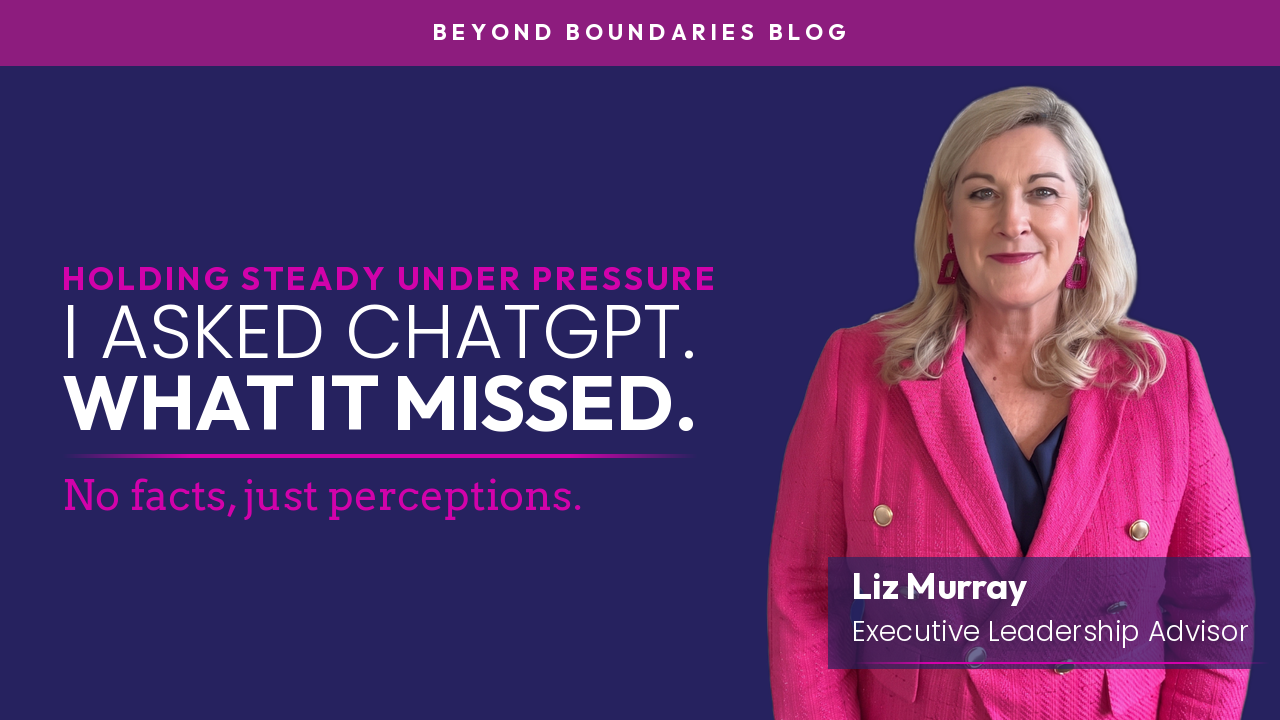
By Liz Murray
Executive Leadership Advisor
Leadership authority rarely disappears overnight.
It drifts.
Most leaders assume hesitation means they are being thoughtful.
They pause before answering.
They say they want more information.
They tell their team to leave it with them.
Sometimes that is wise.
But often hesitation reveals something else entirely.
A quiet internal negotiation.
Leaders already know the direction they need to take, but they delay the decision because they are protecting something.
Their reputation.
Their like ability.
Their sense that leaders are supposed to have all the answers.
The problem is that hesitation rarely stays private.
Teams feel it immediately.
When leaders delay decisions that already feel clear, standards begin to drift.
Over time this drift shapes culture, morale, and trust in ways leaders do not always anticipate.
When leaders delay decisions the team feels it
I once worked with a CEO who was struggling with a relatively simple decision.
One of their managers had proposed a new idea to improve team engagement. The CEO liked the idea but felt uncomfortable moving forward because they did not yet know exactly how the process would work.
Each time the manager followed up, the CEO would say the same thing.
Leave it with me.
The CEO was putting pressure on themselves to produce the solution before approving the idea. In their mind a leader was supposed to have the answer before allowing anything to move forward.
What they were actually avoiding was delegation.
The manager and their team were ready to experiment and work through the details. Instead they felt blocked.
Over time frustration grew.
The manager began to feel their experience and ideas were not valued. Eventually they started exploring other job opportunities because they felt the organisation was too closed off to innovation.
Ironically, when the manager asked the CEO to be a referee for a new role they were considering, the CEO realised they might lose someone highly capable. In that moment they agreed to trial the idea.
The result was remarkable.
Employee engagement increased significantly and staff retention improved by thirty five percent.
The lesson was simple.
The CEO never needed to have the full solution.
They only needed to decide whether the idea aligned with the organisation’s direction and trust their team to work through the details.
Protecting harmony can quietly lower standards
Another leader I worked with managed a large team and genuinely cared about her people.
One of her team members was going through personal difficulties and their performance began slipping.
They arrived late.
They left early.
They were reactive with customers and the quality of their work declined.
The manager saw what was happening but avoided addressing the issue. She told herself she was being supportive while the employee worked through a difficult time.
In reality she was protecting herself from being disliked.
By rescuing the individual from accountability she hoped to maintain harmony.
The cost of this delay was far greater than she anticipated.
Other team members began to notice the difference in expectations. They became frustrated that they were carrying the workload and tolerating negative behaviour.
Morale dropped.
Productivity declined.
Respect for the manager slowly eroded because the standards she had previously upheld were no longer enforced.
Eventually the entire team’s performance suffered.
This is the quiet danger of hesitation in leadership.
When leaders hesitate they quietly lower the standard.
When expectations are not reinforced consistently, teams begin to lower their own standards to match what they see tolerated.
When control replaces clarity
Hesitation does not always appear as silence.
Sometimes it appears as control.
I worked with a manager who believed the best way to ensure high standards was to teach every team member exactly how each task should be completed.
During induction new staff received detailed instructions on every process. What they never received was a clear explanation of the outcome they were working toward.
When team members completed tasks differently from the manager’s preferred method, she would retrain them again and again.
She believed she was protecting quality.
In reality she was restricting initiative.
Several experienced team members eventually asked to transfer to other departments. They felt their capability was not trusted and their ideas were not valued.
When the manager sought coaching support she began to see the pattern.
Her desire to control the process came from the pressure she placed on herself to ensure everything was done perfectly.
Once she shifted her focus toward explaining the bigger vision and the outcome she wanted the team to achieve, something changed.
Team members began contributing their own ideas and approaches.
Innovation increased.
The manager discovered that her role was not to control every action but to create clarity about the direction.
That shift removed enormous pressure from her and unlocked the potential of the team.
The moment hesitation costs credibility
One of the most confronting lessons I learned about hesitation came during my time as a school principal.
Our organisation had worked hard to establish a clear set of values and expectations. Team members understood what exceptional practice looked like and supported each other in maintaining those standards.
Over time one team member began falling behind.
They were frequently absent and increasingly negative about new ideas. While the rest of the team was collaborating and innovating, this person resisted change and complained that things were moving too fast.
I could see the gap growing between their performance and the rest of the team.
Still, I hesitated.
I worried that raising the issue might result in a bullying complaint. The longer I delayed the conversation, the more frustrated the rest of the team became.
My credibility began to suffer because everyone could see the issue was not being addressed.
Eventually I reached a point where the emotional exhaustion of avoiding the conversation became greater than the risk of having it.
I met with the team member and started with genuine curiosity about how they were feeling in the role. Then I clarified the expectations of the position and the vision the rest of the team was working toward.
We talked openly about the gap between those expectations and their current experience.
There was no accusation, only clarity.
During the conversation the team member realised the pace and direction of the organisation no longer matched the environment they wanted to work in.
They chose to move into another role elsewhere that suited them better.
From that moment forward the entire team moved forward with renewed energy and collaboration.
The most important lesson for me was this.
Avoiding difficult decisions rarely protects people. It simply prolongs the discomfort and slows progress for everyone involved.
The real leadership shift
Across all of these examples one pattern appears again and again.
Leaders do not hesitate because they lack intelligence or capability.
They hesitate because they are protecting something.
Approval.
Harmony.
Control.
Their image as someone who should already have the answers.
The moment leaders recognise this pattern they can make a different choice.
Instead of asking what they should do next, they can ask a more powerful question.
What would the leader I say I am do in this moment.
Leadership clarity rarely arrives as a feeling.
It arrives when a leader chooses to act in alignment with their standards and vision.
When that decision is made, confidence often follows quickly behind.
A reflection for leaders
If you notice yourself saying leave it with me more often than necessary, it may be worth pausing to reflect.
Is the hesitation coming from a lack of clarity about the mission and vision.
Or is it coming from the desire to protect something.
Because every decision a leader delays teaches the team something about what is acceptable.
Leadership authority does not usually collapse overnight.
It drifts slowly through moments of hesitation.
The good news is that the opposite is also true.
Each clear decision restores momentum, trust, and direction.
Sometimes the most powerful leadership move is simply choosing to stop negotiating with yourself.
If this article resonated with you, explore the Be Exceptional leadership framework designed to help leaders build clarity, confidence, and decisive leadership practices.
About the Author
Liz Murray is an Executive Leadership Advisor and the founder of Edge of Possibilities. After more than two decades leading large multi site teams, Liz now supports leaders to strengthen decision making, emotional intelligence and team culture. Her work focuses on helping capable leaders move from hesitation to clear leadership identity so they can lead with confidence and clarity.
Liz previously served as a school principal overseeing teams of more than ninety staff across multiple sites. She is a Master Practitioner of Coaching and works with executives and leadership teams across Australia.
You can learn more about Liz’s leadership coaching and programs at Edge of Possibilities.
Check out my On Line Course!
Take your Leadership skills to a whole new level, whether you are a seasoned professional or new to leadership.
Be Exceptional
The on Line Course that shares the secrets to how to show up as a Leader without the burnout and overwhelm.