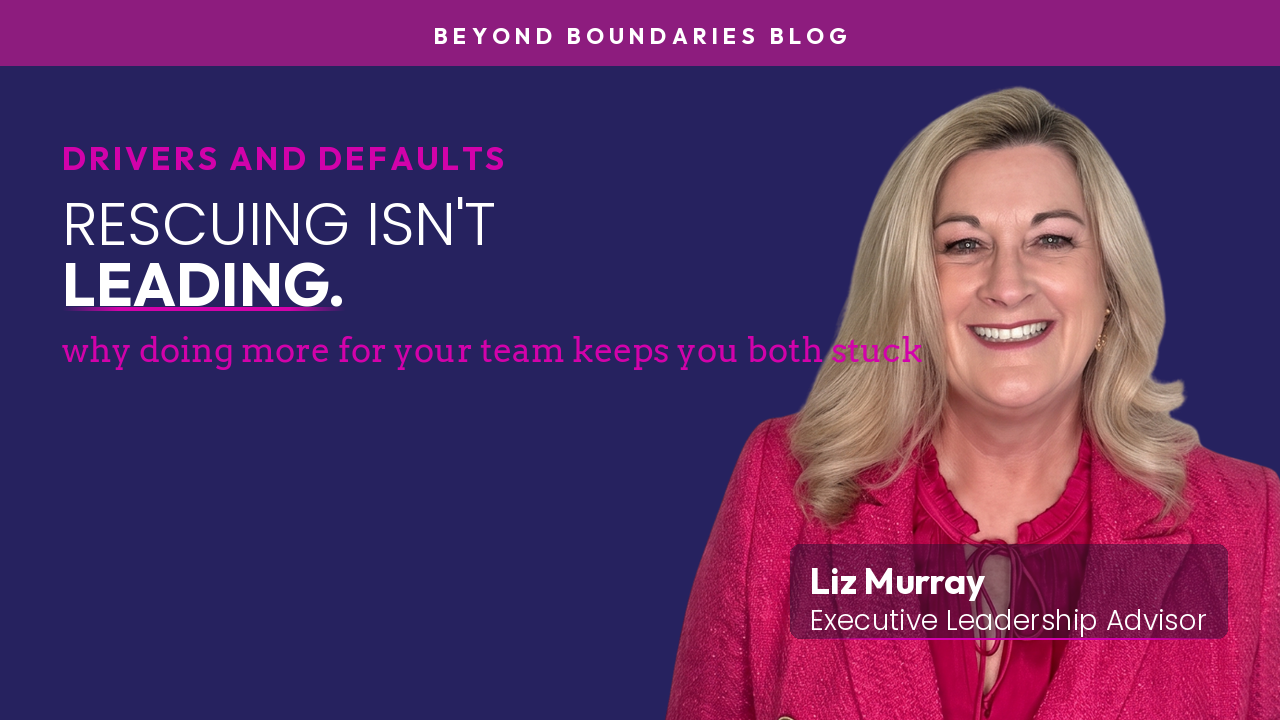
Rescuing isn't leading: why doing more for your team keeps you both stuck
Sep 27, 2026There's a version of being a good leader that looks a lot like being available. Answering every message. Picking up the part of a project that's stalled. Stepping in the moment someone's stuck rather than watching them sit in it a while longer. It feels like care. For a long time, I called it care too.
What I didn't call it, because I didn't see it, was rescuing.
Rescuing doesn't look like a mistake. It looks like helping. You take on someone else's problem because you can solve it faster, because you don't want them to struggle, because there genuinely aren't enough hours in the day and you'd rather find more than watch someone fumble. None of that comes from a bad place. It comes from wanting to be useful. But wishing for more time to carry someone else's problem was never the actual issue. The issue was that I was carrying it at all.
The part that actually stopped me
My real job was teaching people to solve problems using their own thinking. That's what good leadership does, it builds capability in the people doing the work. And there I was, telling instead of asking, solving instead of stepping back, doing the exact opposite of what I was meant to be building in them.
It doesn't stop at their problem either. Every time you rescue, you take on more of someone else's load as your own. You end up under more pressure, not less, because your own work loses momentum while you're busy holding theirs. And the energy you're running on when you're depleted like that doesn't stay contained to one project. It's the energy you bring to everyone and everything, whether you notice it or not.
The shift that actually changes it
Handing a problem back isn't handing someone a solution. It's asking a deeper question instead. That's the whole shift, and it's smaller than it sounds.
It's not a loss for the person you'd normally rescue either. It's a win for both of you. They get the chance to work out what actually fits for them, which builds a different kind of confidence than being handed an answer. And you get your focus and energy back for the work only you can do.
The old story was that helping meant doing it for them. The new one is that trusting someone enough to think for themselves gives them the satisfaction of solving it, and gives you the momentum you'd otherwise be spending on their problem instead of yours. That's what leading from clarity looks like here. Not doing more for people. Believing they're capable of more, and getting out of the way long enough to let them prove it to themselves.
The whole month, in one line
This is where the month's been heading. Rescuing instead of leading. Demanding respect instead of earning it. Missing your own default under pressure. Letting a standard slip because holding it felt like too much that day. Carrying what was never yours to carry. Five different patterns, one choice underneath all of them: are you leading from clarity, or running on a default?
If you want to see exactly where your own authority holds and where it quietly drifts, that's what the Leadership Mirror shows you, in about five minutes.
Where are you still rescuing instead of empowering? I'd genuinely love to know, tell me in the comments.
P.S. If this pattern's showing up for you, this month's free guide, Why momentum breaks down under pressure, covers 5 more like it and exactly where to catch each one: Get the guide →
Check out my On Line Course!
Take your Leadership skills to a whole new level, whether you are a seasoned professional or new to leadership.
Be Exceptional
The on Line Course that shares the secrets to how to show up as a Leader without the burnout and overwhelm.